Animals and husbandry
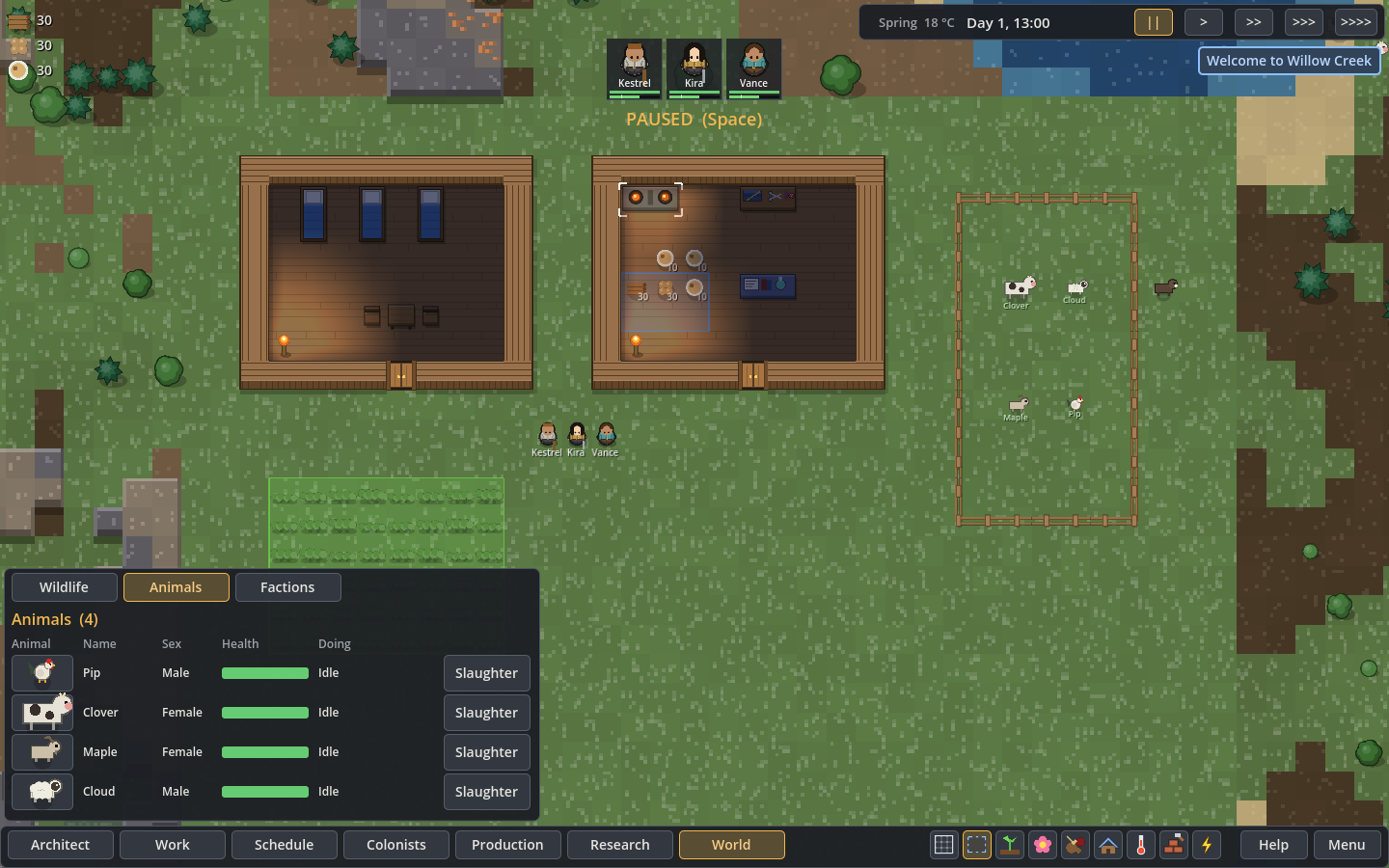
Get livestock
Section titled “Get livestock”Open World > Wildlife and find a chicken, goat, sheep or cow. Mark it for Tame, or use the taming order in Architect. Enable Handle work and keep hay or kibble available. Animals skill affects taming; a failed attempt can be retried.
Trade caravans may also sell livestock. Bought animals join the colony where the trader stands. Deer, hares, boars and wolves cannot be tamed. Your livestock appear in World > Animals.
Build a pen and shelter
Section titled “Build a pen and shelter”- Paint an Animal area using the zone tools.
- Fence its perimeter to contain the animals. People climb fences; animals normally cannot.
- Include grazing land and accessible feed.
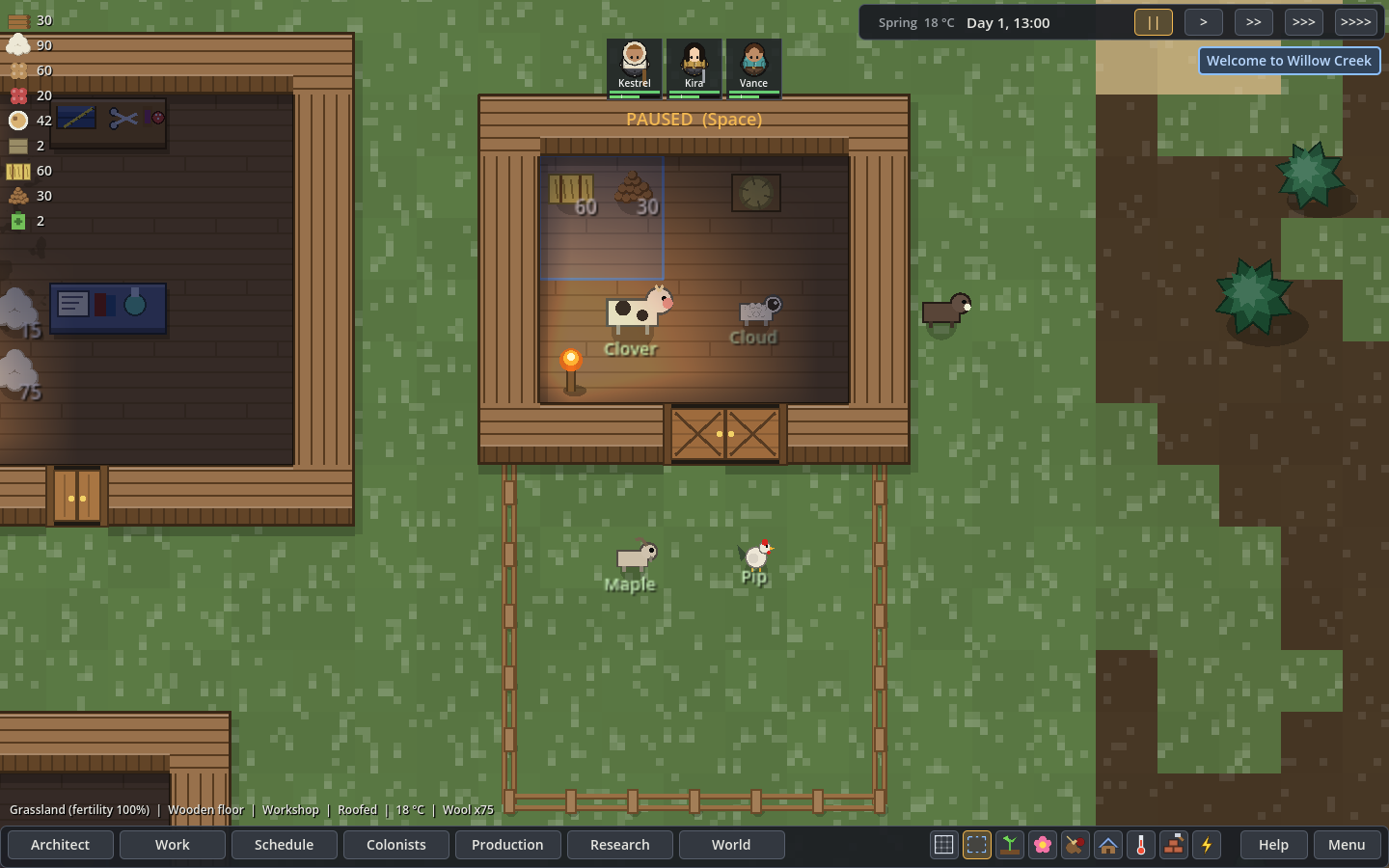
- Build a walled, roofed barn inside the area and connect it with a Barn door.
- Heat or cool the barn for the animals’ safe temperature range.
Fences do not enclose a room or hold a roof up. Ordinary doors do not let livestock pass on their own; barn doors do. A handler can lead an animal over a fence into a closed pen when it cannot get in unaided, so you do not need to leave a gap.
Uncontained animals can run off. Wolves can break fences to reach prey, while a closed walled barn protects livestock from them.
Feed the herd
Section titled “Feed the herd”Animals graze grassland, which can be eaten bare and regrows in suitable weather. Winter, snow and crowding can leave too little grazing. Grow Haygrass, store its hay and make Kibble for a reserve. Keep feed where the animals can reach it.
Wild grazers use the same pasture, and hungry wildlife may leave the map. Expand or reduce the herd according to your food supply.
Eggs, milk and wool
Section titled “Eggs, milk and wool”Fed hens lay eggs; cows and goats produce milk; sheep grow wool, including rams. Handlers milk and shear animals when ready. Only females produce milk and eggs. Haulers collect the products.
Milk and eggs can be cooked, including as the animal ingredient in fine meals. Wool can be used in tailoring. See the animal catalog for production intervals and temperature ranges.
Breed animals
Section titled “Breed animals”A fed adult female mammal needs an adult male of the same species in the colony to become pregnant. Young animals eat less and cannot produce or breed until grown.
With a rooster, some eggs are fertilized. Build a Nest box where hens can reach it. Haulers bring an egg, a hen broods it, and a chick hatches after enough brooding. A box alone cannot hatch an unattended egg. Fertilized eggs can be cooked, so protect the ones intended for breeding with the relevant bill filters.
Care, slaughter and trade
Section titled “Care, slaughter and trade”Handlers tend hurt livestock without medicine. A downed animal in dangerous weather can be carried to a safe room inside its area. Provide that shelter before extremes arrive.
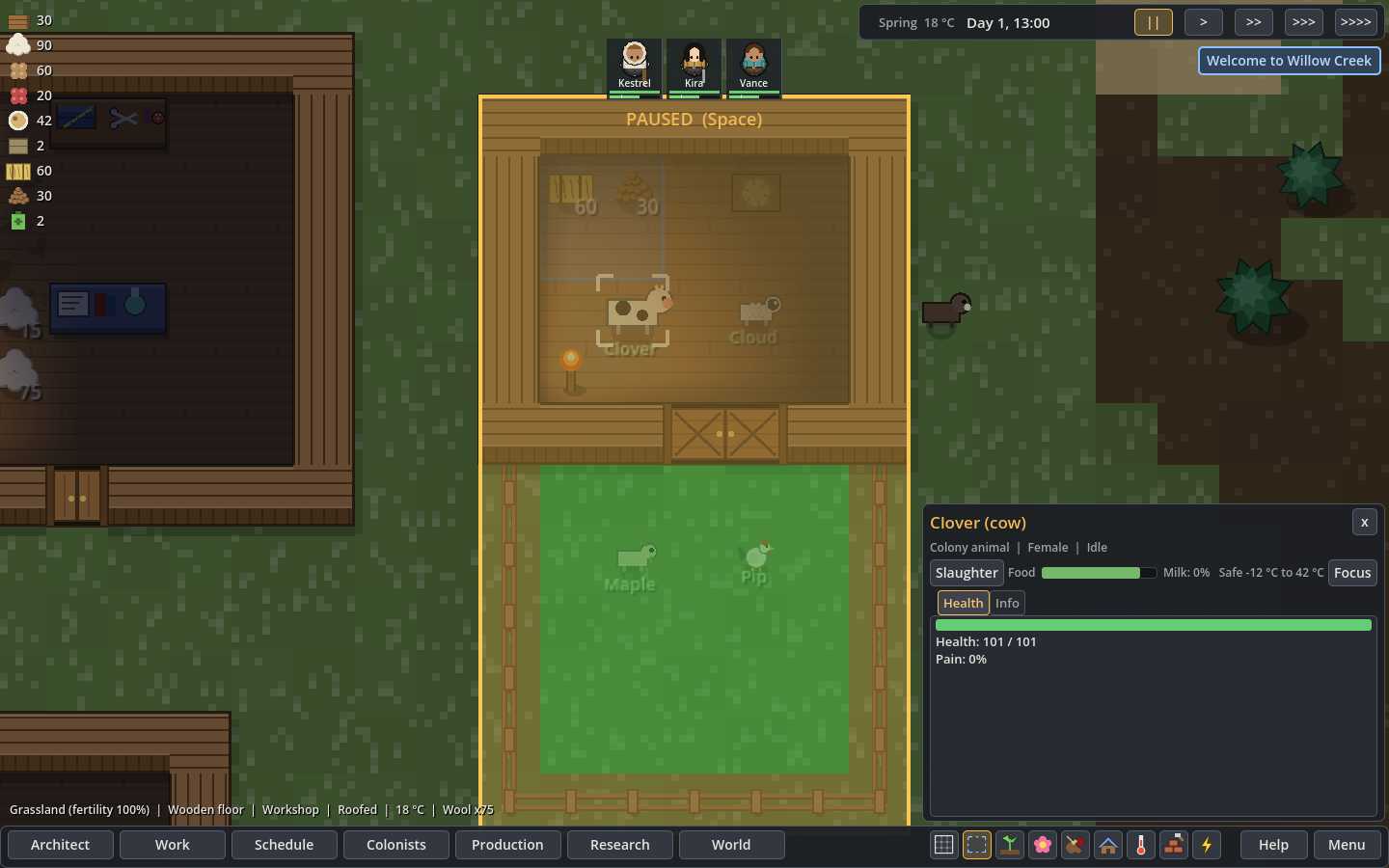
Select Slaughter to have a handler kill a colony animal and haul its corpse for butchering. Selling livestock to a caravan removes it from the herd. Cancel slaughter before the handler finishes if you change your mind.