
Wood
Logs cut from trees. Used for most early construction.
- Stack limit
- 75
Resources, food, medicine, weapons, clothing and animal corpses. Values shown are starting values. Quality, material, skills and conditions can change them during play.
48 entries. Use the site search to find an entry by name.
Logs cut from trees. Used for most early construction.

A heavy chunk of rock. Cut it into blocks at a stonecutter.

Cut stone. Sturdy building material.

Refined metal for tools, weapons and machines.

A precious green stone. Adds to colony wealth.

Woven cotton. Tailored into clothes at a tailoring bench.

Tanned animal hide from butchering. Warmer clothes than cloth, but hotter in summer.

Sheared from the colony's sheep. By far the warmest clothes in winter, and the hottest in summer.

Crops left to rot down in a compost bin. Spread over rough stone or sand it makes soil you can farm (Architect > Structure > Soil). Spread on crops it makes them grow faster (a grow zone's Fertilize).

Raw cereal grain.

Hardy tubers.

Wild berries. Tasty enough raw.

Raw meat from a hunted animal.

Fresh milk from the colony's cows and goats. Drunk as it is, or cooked: it counts like meat in a fine meal. Spoils in 3 days unless frozen.

Laid by the colony's hens. Cooked into meals: they count like meat in a fine meal.

Laid by a hen while the colony has a rooster. Haulers take them to a nest box, where a hen broods them into chicks; they can be cooked like eggs, too.

A plain but nourishing cooked meal.

A carefully prepared meal. Lifts the spirit.

Dry preserved food. Never spoils.

Dried haygrass. Animal feed: the colony's animals eat it when there is no pasture left, and handlers bring it to animals they tame. It keeps for two months. People can't eat it.

Pellets of meat and hay pressed together at a butcher table. Animal feed that never spoils, a little more filling than hay. People can't eat it.

Poultices made from healing herbs.

Proper bandages and salves.

A short blade. Quick melee weapon.

A heavy wooden club.

A long spear with a steel tip.

A simple wooden bow.

A crude but effective rifle made from salvaged pipe.

A fast-firing precision rifle.

A simple shirt. Covers the torso and arms.

Plain trousers. Covers the legs.

A thick hooded coat for winter. Worn over a shirt; far too warm in summer.
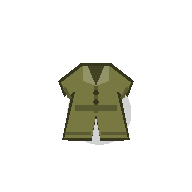
A long, light coat that keeps the sun off. Worn over a shirt.

A knitted winter cap.

A hat with a wide brim for shade in the heat.

A hammered steel cap. Turns many blows and bullets to the head.

Steel plates sewn into a padded vest, worn instead of a shirt and under a coat. Good against bullets, light enough to work in.

Overlapping steel plates over the body, arms and legs. Stops most cuts and many bullets, but it is heavy: its wearer walks 20% slower.

A pack worn on the back. Holds 3 stacks of things (4 in leather): colonists keep a meal in it to eat far from home, doctors some medicine.

The remains of someone. It will decay with time.

A dead deer. Butcher it at a butcher table for about 30 raw meat and 18 leather.

A dead hare. Butcher it at a butcher table for about 8 raw meat and 4 leather.

A dead boar. Butcher it at a butcher table for about 35 raw meat and 20 leather.

A dead wolf. Butcher it at a butcher table for about 20 raw meat and 14 leather.

A dead chicken. Butcher it at a butcher table for about 8 raw meat and 0 leather.

A dead goat. Butcher it at a butcher table for about 24 raw meat and 14 leather.

A dead cow. Butcher it at a butcher table for about 55 raw meat and 32 leather.

A dead sheep. Butcher it at a butcher table for about 24 raw meat and 12 leather.